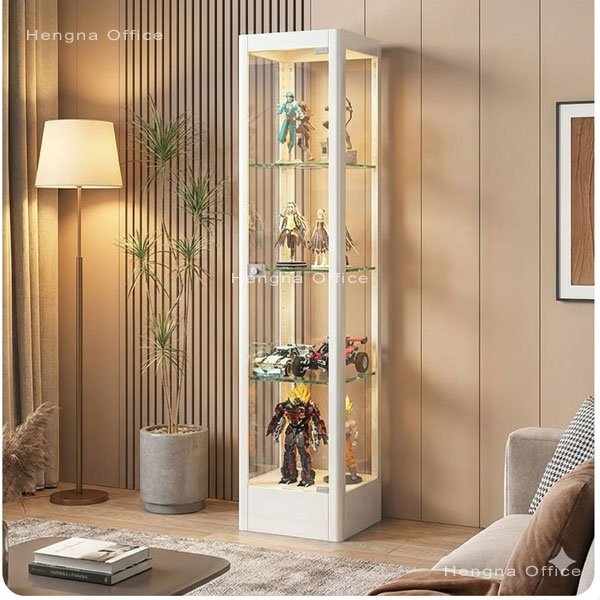
If you run a short-term rental, replacing furniture every season isn’t a joke. It’s a line item.Ask any property manager how long their wood cabinets lasted. You’ll hear the same stories — doors that won’t close, laminate bubbling at the edges, drawer tracks that seized up. Unboxed three months ago. Already waiting for the replacement to ship.The cabinets weren’t defective. The environment eats them.
Guests won’t treat your furniture like you would
This isn’t about bad guests. It’s about people on vacation. They paid to relax, not to maintain your furniture. Cold drinks go straight on the cabinet surface — no coaster. A damp towel gets draped over the edge. Kids come back from the pool and open cabinet doors looking for snacks with wet hands. All of it is normal vacation behavior. Wood just can’t take it.
A cold glass sitting on a wood cabinet for half an hour — the condensation works its way into the laminate seams. Repeat that a few times and the edges start peeling. Not because anyone was careless. Because wood and moisture are fundamentally incompatible.
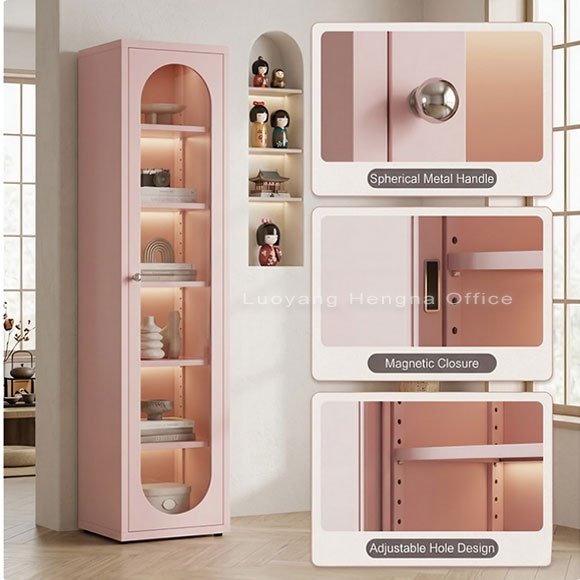
Steel cabinets handle this differently. Cold rolled steel doesn’t absorb water. The powder coat finish isn’t a film glued on top — it’s electrostatically bonded and heat-cured. Wet cloth, cold glass, sticky fingerprints — wipe it and it’s gone. No lasting marks. That’s not better manufacturing. That’s the material itself.
Humidity is the real enemy
Beach rentals are the textbook case. Windows open to the ocean breeze all day. Air conditioning kicks on at night and drops the temperature by 10 to 15 degrees. A wood cabinet in that room isn’t asking if it will warp. It’s asking how soon.
In humid coastal markets, MDF display cabinets rarely survive a full rainy season. Not because they’re cheap. Because wood absorbs moisture, swells, dries, shrinks, then absorbs moisture again. After a few wet-dry cycles, the door gaps shift and nothing lines up anymore. Guests take a photo. The review says “furniture looks worn out.” The cabinet is two months old.
Put a steel cabinet in the same spot and nothing happens. Steel doesn’t absorb moisture. No swelling, no shrinking. You don’t need a physics degree to understand that — metal isn’t a hygroscopic material.
After checkout, cleaning is the real test
Here’s something most people don’t think about: the person who does the most damage to your furniture isn’t the guest. It’s the cleaning crew.
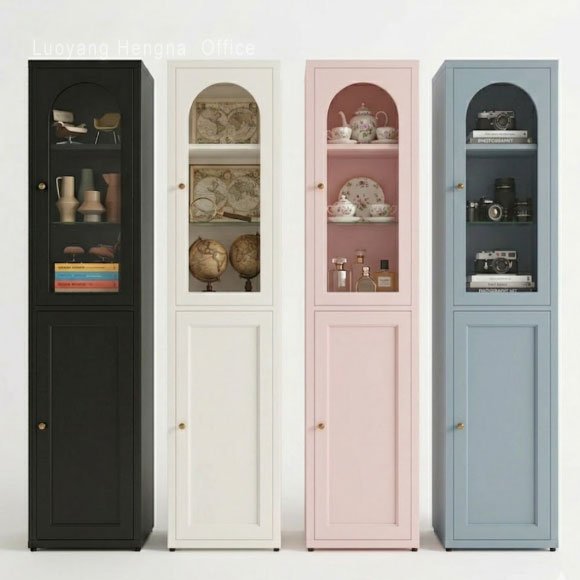
Cleaners turn over multiple properties a day. The routine is fast, efficient, and gets the job done. A damp rag wipes across cabinet surfaces. Cleaning spray drifts a little too close to the door edges. The mop handle bumps the base corner now and then. None of this is sloppy work. It’s just what happens when you clean a unit in 45 minutes.
With wood cabinets, the laminated edges fail first under this kind of wet wiping plus occasional impact. Then the inside of the doors — cleaners open them to wipe shelves, but nobody goes back to dry the seams. Moisture sits in the joints and slowly swells the particle board from the inside.
Steel cabinets don’t have this problem. Powder coated surfaces don’t care about wet rags. They don’t need conditioning. The cleaner wipes it down, water spots dry on their own, that’s it. The stuff you hate most — re-oiling, checking edges for peeling, touching up chips — none of that exists anymore. Not “easier.” Not necessary.
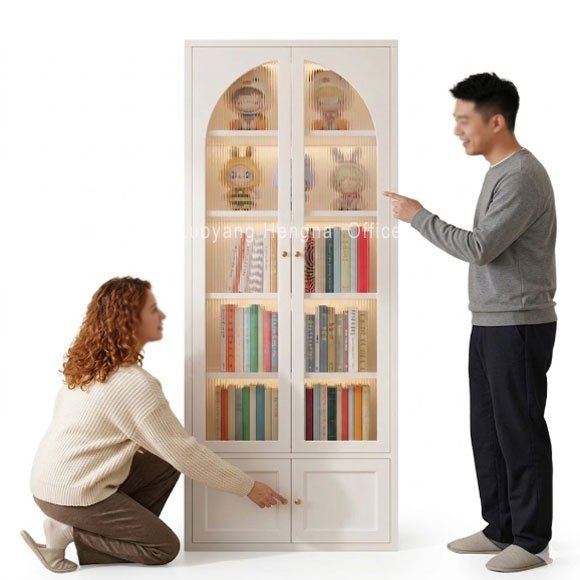
What actually holds up in a vacation rental
If you’re buying display cabinets or storage cabinets for short-term rental properties, three rules will save you a lot of replacements:
One, skip MDF and solid wood. Not because there aren’t good wood cabinets out there. Because wood has almost zero margin for error in a rental environment. One guest, one damp weekend, one overworked cleaner, and it’s done.
Two, tempered glass doors beat solid doors every time. Guests want to see what’s inside — you’re displaying local pottery, artisan soaps, welcome packs for new arrivals. Glass doors let them see without opening. Fewer door cycles means less wear on the hinges and handles over time.
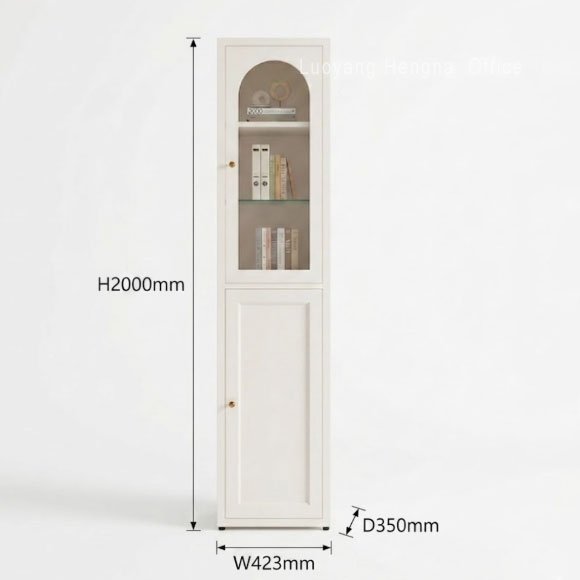
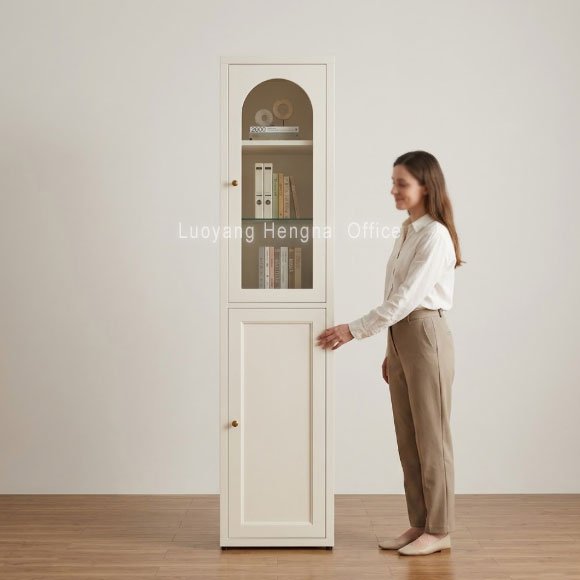
Three, go narrow. Most vacation rentals aren’t spacious — studios and one-bedrooms in the 300 to 500 square foot range. A cabinet 423mm wide fits into a corner without crowding the room. Anything wider eats floor space and makes the unit feel cramped. Your guests won’t write “the cabinet is too wide” in the review. They’ll write “the room felt small.”
What a rental-ready cabinet actually looks like
Three shelves or more. Bottom shelf for supplies and extras — welcome kits, clean towels, disposable slippers. Middle shelves for display — local artisan pieces, books, a small plant. Top shelf for less-used items or pure decoration. Tempered glass doors with a lock — not everything needs to be guest-accessible.
White or light-colored. In a small space, dark furniture is a mistake. It absorbs light and makes rooms feel closed in and smaller than they are. White reflects. Glass transmits. The room reads clean, open, and cared for.
Steel body, not wood. KD flat pack — one person, 40 minutes to assemble. If you move properties, renovate, or just decide to rearrange, you can disassemble and reassemble without the structure loosening. Screws go into steel, not particle board. The fit stays tight.
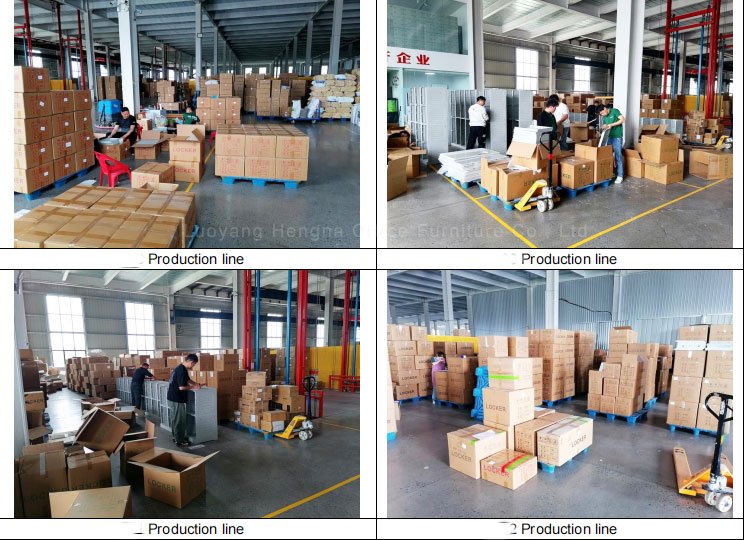
I’ve watched too many property managers make the same call: buy cheap or buy pretty, then replace it all every season. Three rounds of wood cabinets cost more than one steel cabinet that lasts a decade.
This isn’t an argument against wood furniture. Wood has its place — owner-occupied homes, showrooms, low-turnover environments. Short-term rentals aren’t on that list. Your guests didn’t pay to protect your furniture. Your cleaners don’t have time for delicate handling. Your property’s humidity swings daily. Stack those three together, and wood just can’t keep up.
The material you choose depends on the scene you’re furnishing. But if you’re already adding up how many cabinets need replacing this season — try a different material. Run the numbers. You’ll see it.