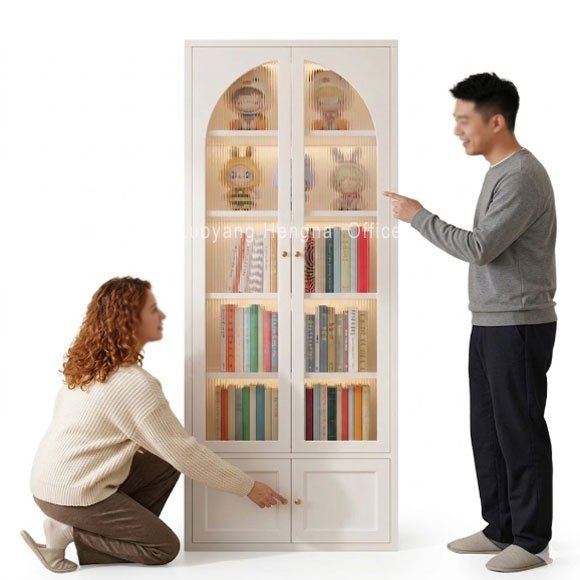
Collectibles have an awkward problem
Put them on an open shelf and dust settles on everything within a week. Put them back in boxes and they’re safe — but you never see them. You paid good money for these things, and you’re stuck choosing between “look at them” and “keep them clean.”
A display cabinet solves this. Glass door lets you see inside. Closed door keeps dust out. But a collector’s cabinet is different from a regular furniture cabinet. What goes inside is stuff you hunted down and paid for — not decor from a furniture showroom. So the criteria for choosing one are different.
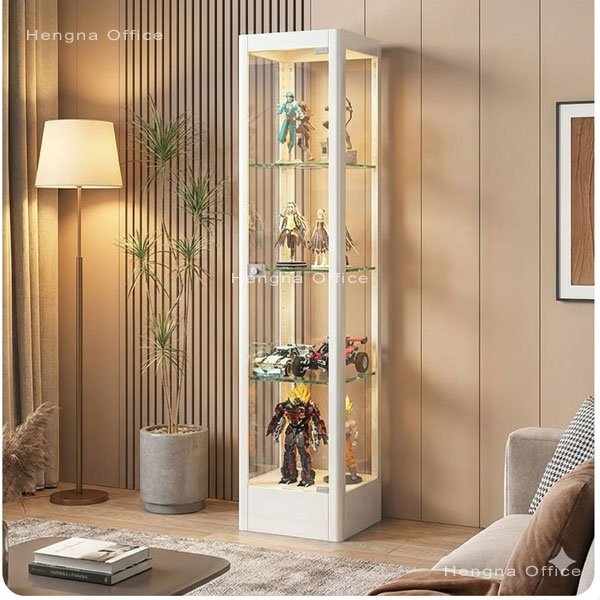
Curio Cabinet for Collectors |Start with the glass
Not all display cabinets use good glass. Cheap cabinets use thin glass that tints what’s inside green. For collectibles, you want three things from the glass: clarity, thickness, and safety.
Clarity means the glass doesn’t distort or tint the color of what’s behind it. Standard float glass has iron content that gives it a slight green tint — you notice it most at the edges and when the glass is thicker. For collectibles where color matters — a pink figure, a limited edition with specific color matching — tinted glass changes how the piece looks.
Tempered glass at 5mm thickness is the standard. It’s clear enough for accurate color rendering. Thinner glass is cheaper but less safe and more prone to distortion.
Safety means tempered. If you’ve read the tempered glass safety article on this site, you know the basics. If the cabinet doesn’t use tempered glass, don’t put collectibles in it — especially not in a home with kids or pets.
Shelves matter more than you think
Collectibles come in wildly different sizes. A 1/6 scale figure stands close to 30cm tall. A blind box figure is 7 to 8cm. A gacha capsule toy is 3 to 4cm. The same cabinet needs to hold all of these — and that means shelf spacing is everything.
Many display cabinets have fixed shelf positions. Before you buy, measure your tallest piece and check whether it fits between two shelves. If it doesn’t, the cabinet won’t work for you.
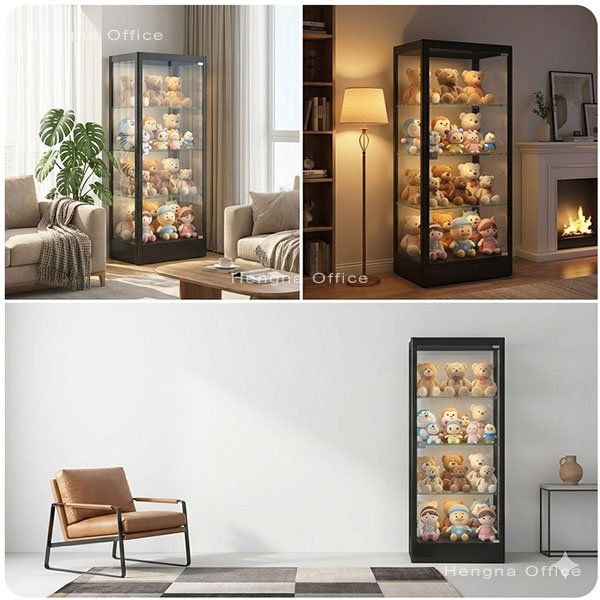
Adjustable shelves give you much more flexibility. A 78-inch tall cabinet with five or six adjustable shelves can be configured for large figures on one shelf spacing and small collectibles on another — by moving a single shelf up or down. You can rearrange the layout twice in the same cabinet as your collection changes.
The most common mistake collectors make: looking at cabinet width and ignoring shelf spacing.
Why steel works for collectors
Collectors tend to accumulate cabinets. One for figures, one for books, one for shoes. Weight adds up.
A solid wood display cabinet filled with figures can weigh 40 to 60kg. That’s a problem if you rent and move every few years — or if you rearrange your collection room regularly.
Steel cabinets are lighter. Steel is denser than wood, but a steel cabinet uses much thinner material — 0.8mm panels versus 15 to 18mm wood panels. The total weight difference is significant. A steel cabinet of the same dimensions weighs roughly one-third less than a comparable wood cabinet.
Steel also handles disassembly and reassembly better. Collectors who move pack each figure individually, disassemble the cabinet, and rebuild at the new place. Wood cabinets lose screw grip after a few assembly cycles. Steel cabinets don’t — the screws thread into steel, not particle board.
Dust, UV, and humidity
Dust is the biggest win with a glass display cabinet. Open shelves need dusting every week. A glass-front cabinet needs interior dusting every six months. For anyone with more than a few figures, that alone justifies the cabinet purchase.
UV is worth considering but not obsessing over. Direct sunlight will fade collectibles over time — dark colors and printed details are most vulnerable. The best solution is simply not placing the cabinet in direct sunlight. Some display cabinets offer UV-coated glass, which helps but isn’t essential.
Humidity is where steel beats wood again. Collectors sometimes place cabinets in basements or north-facing rooms where humidity runs higher. Wood cabinets in those conditions can warp or develop mold over years. Steel doesn’t care about humidity.
How much should a collector spend on a cabinet
The question isn’t “how much does a curio cabinet cost.” It’s “how much is your collection worth.”
If the total value of your collectibles is less than the cabinet you’re putting them in, you should think twice. But most collectors are in the opposite situation — expensive pieces sitting in cardboard boxes or gathering dust on open shelves. In that case, a cabinet is protecting an investment you’ve already made.
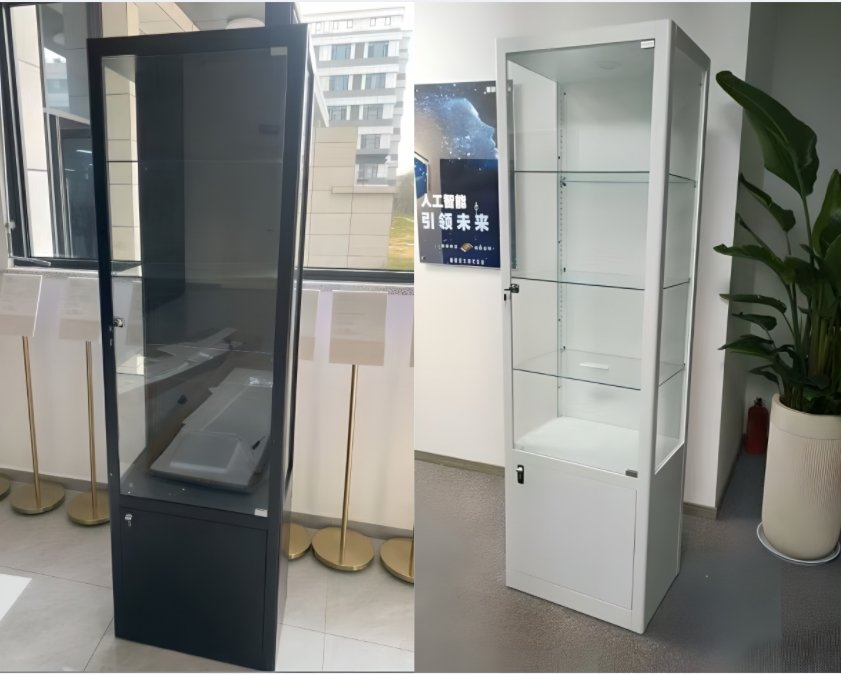
A 78-inch steel display cabinet with tempered glass, adjustable shelves, and optional LED lighting costs less than a single rare action figure. Worth thinking about in those terms.
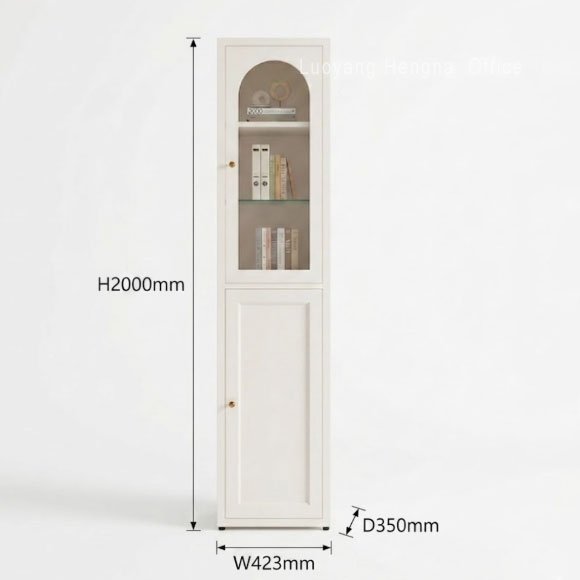
If you’re just starting out or your collection is small, start with one narrow cabinet — 400mm wide. Add more as the collection grows.
Recommendations by collection type
For action figures and blind boxes: a 78-inch tall cabinet with adjustable shelves and tempered glass. Narrow or standard width depends on your wall space.
For small collectibles — gacha, mini figures, trading pins: adjustable shelves are non-negotiable. Fixed shelves at large spacing waste vertical space and make small items look scattered.
For large collections (100+ pieces): buy multiple narrow cabinets rather than one extra-wide cabinet. Multiple units are more flexible for room layout and easier to move when needed.
( If you’re ready to buy a display cabinet for your collection, check out our 78-inch cream white narrow cabinet — adjustable shelves, tempered glass door, optional LED lighting. Works for action figures, blind boxes, and everything in between.)